Before the Wheels Come Off: Why the Best People Leaders Are Already Two Steps Ahead
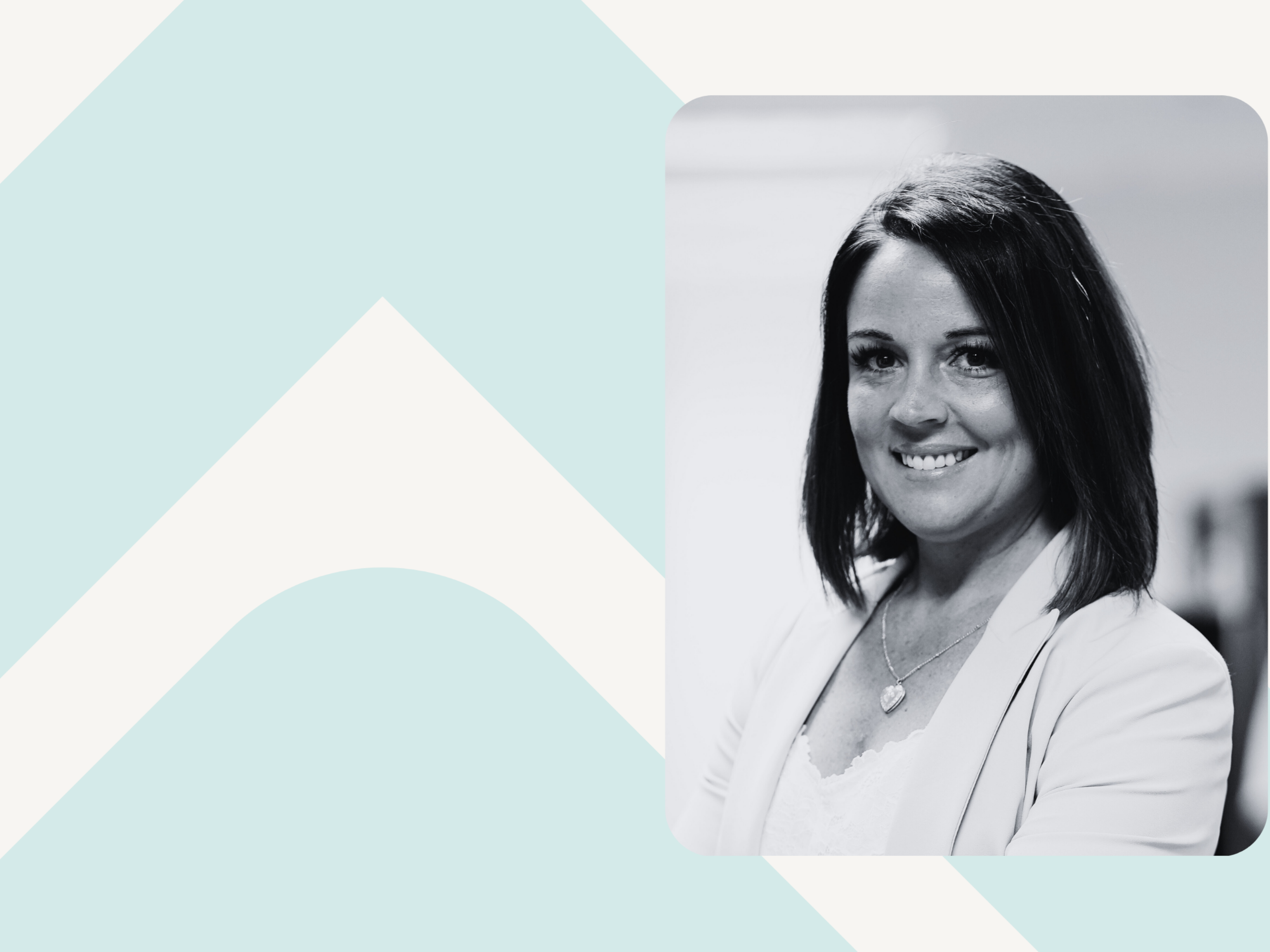
The real work of scaling a people function happens before anyone can see the need for it. Brittney Bahre on reorganizing ahead of volume, redefining the recruiter role, and hiring for a company that doesn't exist yet.
TL;DR
In 2024, headcount at E2 Optics roughly doubled to nearly 2,000, all of it organic. The talent acquisition team carrying that load grew from four people to twenty-two. What made it survivable was built before the demand arrived, when building still looked premature. In hypergrowth the decisive variable is not how fast a leader reacts but when they choose to build. The most consequential people work is the kind no one notices while it happens, because by the time its absence is felt, the window has closed.
Most leaders in the middle of explosive growth spend their attention on whatever is breaking right now: the role that has stayed open too long, or the team that is underwater this week. Brittney Bahre, VP of People Operations at E2 Optics, treats that instinct as the trap. In fast growth, as she describes it, a problem is often no longer the same problem by the time the organization has agreed how to handle it. "By the time we've talked through it, made a plan for it, we're already talking about the past," she says.
The growth behind that lesson was extreme. E2 Optics builds the low-voltage cabling and connectivity inside data centers, the kind of work the AI boom has put in sudden, heavy demand. "The growth is definitely attributed to the AI boom within data centers," Brittney says, and the hiring tracked it directly. Across 2024 the company roughly doubled its workforce to nearly 2,000 employees, organically, without a single acquisition. The team responsible for hiring all of them grew from four people to twenty-two.
The structures that absorbed the volume were largely in place before the volume arrived, and the decisions that mattered were made in the window when they still looked optional, even premature, because the pain they were meant to prevent had not yet surfaced.
This runs against the grain of how most organizations reward their people leaders. Recognition flows to reactive competence, to the executive visibly fixing the fire in front of everyone. The work Brittney describes is harder to see and defend. It is the budget line approved a year before anyone feels its absence, the role redesigned before the old design fails, the cultural mechanism installed while the culture still appears intact. None of it produces a visible win in the moment. Its entire value sits in a crisis that never happens.
That is the difficulty at the center of people leadership under pressure. The most consequential work a leader does in hypergrowth is invisible while it is being done, and becomes legible only in hindsight, once the window to do it has closed. Brittney kept that window open by building each part of the function ahead of need rather than in response to it. It started with the shape of the team.
The Reorganization Before the Volume Arrived
When a function starts to buckle under volume, the instinct is to add people to it. Brittney did something less obvious first. Before the bulk of the hiring landed, she changed the shape of the team that would carry it.
"I was able to reorganize my department to be able to handle specific sides of the industry," she says, "like the commercial side and non-commercial side, and then also created a specific department that handles all of our contractors." The team was not simply enlarged. It was divided along the lines the work would actually take.
Adding headcount to an existing design scales whatever that design already is, including its weaknesses. A recruiting team built to serve one undifferentiated pipeline does not get better at commercial, non-commercial, and contractor hiring by growing. It gets slower, because every recruiter is still trying to do all of it. By splitting the function before the load peaked, Brittney built specialization into the structure rather than hoping it would emerge under pressure. By her own account, "that has enabled us to sustain the growth." The redesign came first, the volume second.
None of it was possible on her authority alone, and she is direct about where the room to act came from. "We have a ton of support from the executive team to fill up my team to be able to support the growth," she says, "so we added twenty new roles." The twenty roles were approved to support growth that was anticipated, not to recover from growth that had already swamped the team. The support arrived ahead of the weight.
Securing twenty new positions for a team that is, on paper, still coping is a hard internal case to make. The business does not yet feel the absence of those roles, so the spend reads as early, even speculative. The leader asking for them is requesting budget against a problem that has not surfaced, and will be judged, if the request lands at all, on a crisis that as a result never arrives. The reward for getting it right is the absence of a story. That is precisely why the case is so rarely made, and why making it is so difficult.
The same logic extended past headcount. Brittney credits "the continued support from the owners of the company to allow me to invest in tools and training for my team to be able to keep up with the industry and the changing climate." Tools and training are the classic casualties of a function in survival mode, the first line cut when every hour is already spoken for. Funding them before the capability gap hardens into a failure protects what the team can do, not just how it is arranged.
What all of this bought becomes visible only in the numbers it made survivable. The team grew from about four people to twenty-two, and the company it served roughly doubled toward 2,000 employees across 2024, with no acquisitions absorbing the strain. The pace did not let up afterward; into 2025 the team had "already hired about 1,000 employees across the country." A four-person team reacting to that demand curve would not have been a smaller version of the same operation. It would have been a different and failing one. The structure had to exist before the test, because the test does not wait for the structure to be ready.
A reorganized team, though, is still only as capable as the people inside it, and the people Brittney needed were not the ones the market was trained to supply.
The Recruiter You Hire Decides the Ceiling You Reach
Brittney's recruiters do not come from corporate recruiting. The choice looks counterintuitive for a team scaling this fast, and the reasoning behind it reveals how far ahead she was looking. "We're not looking for the typical corporate recruiter, because of the rec load and headcount need that the recruiters are responsible for," she says. "It's not a corporate-headquarter-type position. We're looking for people that have staffing industry experience because of how fast we need the roles to be filled and the volume of the headcount on one rec." The recruiter profile was defined around the demand that was coming, not the work as it normally looks.
Her recruiters carry, on average, a headcount of anywhere from ten to twenty open positions on a single requisition, with multiple requisitions running at once. A recruiter trained in the measured rhythm of corporate hiring, one carefully shepherded role at a time, would not simply be slower in that environment. They would be operating a model that does not function at the volume required. Hiring for the future load rather than the familiar one is the same anticipatory logic as the reorganization, applied to the individual rather than the structure.
But the right background only set the floor. The decisive intervention was identity. "The key was really shifting our recruiters out of the mindset of that order-taker mentality to true consultants," she says. "I still push our recruiters. I want them to be true business partners with the hiring managers and the operations side because it takes both of us." This was not a correction issued after recruiters underperformed. It was a definition imposed at the outset of who these people would be, before the volume could harden them into intake clerks processing requisitions as they fell.
The order-taker and the consultant produce different organizations at scale. An order-taker absorbs a requisition and works it. A consultant interrogates it, partners with the hiring manager and operations to shape it, and shares ownership of the outcome. At low volume the difference is a matter of polish. At ten to twenty open roles per requisition it becomes the difference between a function that scales and one that converts more headcount into more backlog. The identity shift was the architectural decision that let the redesigned structure actually hold.
That identity expressed itself most plainly in how the team sourced. "Not just doing the post and pray thing, but making them go out and post," Brittney says. "And then we also need to go out and do the headhunting and find the candidates. Because our industry is so small, finding people with the skillset that we need is so limited." Passive posting waits for the requisition to become urgent and then hopes the market answers. Active headhunting builds pipeline ahead of the open role, the forward posture carried down to the daily behavior of each recruiter.
Here the cost of the choice is at its least visible. A reporting line, a tool budget, a new role all show up somewhere a finance team can see them. A mindset does not. It is the one piece of infrastructure with no line item, no procurement process, and no obvious proof of return. A leader who insists on consultant-grade recruiters from day one is spending real effort, in hiring standards held and in people pushed, on a quality whose absence cannot be demonstrated until the wrong model has already failed under load. By then the failure is not a recruiter's; it is the function's, and it is too late to redefine the people inside it. The mindset had to be established before the volume arrived to test it, because volume does not build the right identity. It only exposes the wrong one.
The work could be structured and the right people hired into it. What it felt like to work there, as the company stopped being small, was the harder thing to hold onto.
Culture at Scale Is Built on Purpose or It Erodes by Default
The shift that forced the work was one of self-perception. At some point a fast-growing company stops being what it was, whether or not anyone says so out loud. "We are no longer a mom-pop startup company," Brittney says. "We are starting to become a full-blown large organization trying to get everybody on the same page and have consistency across the board." Naming that transition is not cosmetic. It is the moment the informal coordination that carried a small team stops working, and the leader who notices early gets to build the replacement before the gaps show.
Two problems sat inside that transition, and they pulled in opposite directions. The first was consistency. With offices spread across the United States, the things a small office handles by instinct no longer travel. "Creating policies, procedures and rolling those out so that everybody's adopting and utilizing them was probably one of the biggest things," Brittney says. Policy infrastructure built proactively across a dispersed organization is unglamorous work, and it is precisely the work that prevents a company from fracturing into a dozen local versions of itself, each operating by its own undocumented rules.
The second problem ran the other way, and it was the harder one to solve. Standardization protects the organization from incoherence, but applied bluntly it can flatten the very thing that made the place worth joining. What Brittney was trying to preserve was specific and personal.
"We were trying to hold onto that culture that [the founder] Kristi built at the very beginning, that family dynamic that is very close to her heart, and making sure that we are still continuing that through as we grow. It's always harder when you start to get bigger to keep that culture because there's more people involved."
Consistency and intimacy are not natural allies at scale. Brittney treats the preservation of culture as something to be actively constructed rather than hoped for. Most leaders speak about culture as a value held. She speaks about it as a structure maintained, something that erodes by default unless deliberate measures hold it in place. The difference between those two postures is the difference between watching a culture dilute and building the mechanisms that keep it intact.
Those mechanisms are concrete, and each one is installed early rather than in recovery. "We're starting to really dive into culture surveys to get feedback," she says. "We're also trying to revamp our onboarding experience to ensure that from the start new hires coming in the door fully understand who we are and what we're about." Onboarding is the first impression the organization makes at scale, the moment a new hire either inherits the culture or misses it entirely.
A first impression only lasts as long as the first few days, and the pressure of a new job erodes it quickly. Carrying the culture through the rest of a new hire's first year falls to a second mechanism: they are paired with a guide, and the pairing is built on tenure rather than role. "As long as they've been with the organization for a certain amount of time, they're able to sign up to be a mentor or guide to the new hires to lead them through their first year," Brittney says. Tenure is the carrier of the founder's culture. By routing new people to the longest-serving ones, the system transmits the original family dynamic through human contact rather than relying on a values slide to do the work. The culture is passed down deliberately, by people, instead of being left to survive contact with growth on its own.
Each of these mechanisms points toward the people doing the work. The surveys are not a leadership scorecard. They exist to surface what the workforce actually wants, before initiatives are designed for them. "It's important to get the insight from the employee base on creating programs and initiatives," she says, "versus leadership or the executive team saying, I think we should do this. We're not down at the field level." This pushes the anticipatory posture below peer level, into the workforce itself. The leader builds the listening infrastructure first, then lets it tell her what to build next, rather than designing in the dark and correcting after the fact.
None of this produces a visible result. A culture that holds together through hypergrowth looks, from the outside, like a culture that was never at risk. The retention that does not crater, the dispersed offices that do not drift, the new hires who absorb the founder's intent rather than diluting it, none of these register as achievements, because they are absences. The work shows up only in the problems that fail to appear. A leader resourcing onboarding, surveys, and a mentor program ahead of the curve is investing in outcomes that, if she succeeds, no one will ever be able to point to. That is the defining feature of cultural infrastructure, and the reason it is so easy to defer until the erosion is already underway and too far gone to reverse.
Building the structures was only half of it. An organization under strain does not absorb new structures quietly, and getting it to adopt them without revolt was its own challenge.
Buy-In Gathered Early Is Resistance That Never Forms
Rollout is where good intentions usually die. A policy is only as real as the organization's willingness to adopt it, and a workforce already absorbing the strain of rapid growth has limited patience for change imposed from above. Brittney's answer is to remove the resistance before it has a chance to form, by building the decision with the people who will have to live with it. "Anytime that we are going to implement anything, we are involving everybody across the board," she says. "So it's not just me making a decision that will be rolled out across the organization. It's me working with operations, with HR, with finance. We're all working together so that we're getting everybody's buy-in, everybody's insight before we just spit something out."
Consensus is gathered before the decision is finalized, not defended after it is announced. This inverts the common pattern, in which a leader designs a change, ships it, and then spends months managing the backlash from the functions that were not consulted. By pulling operations, HR, finance and other functions in while the decision is still being shaped, Brittney converts the people most able to obstruct a rollout into co-authors of it. In this way, the resistance is pre-empted, not overcome, and the structure of the trade is familiar by now: the cost is paid up front, in slower decisions, to avoid a far larger cost later, in failed adoption.
The slower decision is the real trade-off. Cross-functional consensus takes time and attention that a leader in a hurry would rather conserve. The judgment Brittney is making is that the time spent securing buy-in before rollout is cheaper than the time lost to a rollout that stalls, is ignored, or has to be relaunched after it fails. That calculation only favors the patient route if you are measuring the full cost of resistance, including the cost that never materializes because the work was done early. Most organizations do not measure that, which is why the default is to announce a finished decision and then absorb the resistance it provokes.
Consensus settles how a single change lands. It says nothing about how many changes an organization can take at once, which is a separate problem. Building ahead of need does not mean building everything at once. "Don't try to eat the elephant in one bite," she says. "You’ve got to take small chunks. You’ve got to take baby steps. You're not going to solve everything in one year even." The forward-looking leader, precisely because she can see everything that will eventually need building, is the one most tempted to build it all immediately.
That restraint is itself part of the infrastructure. An organization already strained by growth has a finite capacity to adopt change, and exceeding it produces the same operational chaos that the building was meant to prevent. Brittney is explicit about the failure mode: throwing too much change at people at once "is probably going to cause a little bit more chaos," she says, undoing the coherence the changes were supposed to create. Pacing is how the anticipatory posture stays survivable. Building before the demand arrives, but in sequence the organization can actually metabolize, is what separates structural coherence from a leader frantically constructing in every direction at once. Speed without that coherence does not produce scale. It produces the very disorder it was meant to avert.
Cross-functional consensus controls how a single change lands across the organization at one moment. Pacing controls how changes accumulate over time. Both are restraint in service of building, and both leave the leader with nothing to show: a rollout that meets no resistance, and a sequence of changes the organization absorbs without noticing.
Underneath all of it is a single posture, and it shows in how Brittney staffs her own team.
Hiring for a Company That Did Not Exist Yet
"I'm not hiring for the now," she says. "I'm hiring for what the future looks like." The roles she added were sized for the organization the company was becoming, not the one filing requisitions that week.
Hiring for the now means filling the gap in front of you with someone who can do today's job today. Hiring for the future means bringing in capacity that exceeds the present need, so that when the need grows into it, the person is already in the seat and already up to speed. The first is cheaper, faster, and far easier to justify to anyone watching the budget. The second looks like overhiring right up until the moment it looks like foresight, and there is no way to know in advance which of those it will turn out to be.
What makes the bet defensible is the reasoning underneath it, which Brittney frames as a deliberate orientation rather than instinct. "It’s thinking about the future, not just thinking about how do we fix the now," she says, "thinking about how this helps us going forward and being in that strategic mindset." Where a reactive leader solves the problem in front of them, the strategic one is already staffing for the problem that has not landed yet, on the logic that by the time it lands, hiring against it is too late.
Hiring for the future is challenging because you do not know the exact shape of that role yet. A company doubling in a year cannot specify the job a new recruiter will be doing in eighteen months, because the organization that will define that job does not exist yet. So she screens for the one trait that survives the uncertainty. "I make sure that I find somebody that is agile and is adaptable to change," she says. "Because we're a growing organization. Things are shifting. They're moving. They're changing constantly." Adaptability is the proxy for a future you cannot name. When the specifics are unknowable, you hire for the capacity to absorb whatever the specifics turn out to be.
The cost of all this falls, predictably, on the leader making the call, and it falls in the present. A payroll sized for the company you are becoming looks, to anyone reviewing it today, like a payroll slightly too large for the company you are. The recruiter brought in for volume that has not yet peaked is, for now, a recruiter with spare capacity. The return on the decision is legible only in retrospect, once the future arrives and the capacity is already in place to meet it. Until then the leader is being measured on a bet whose payoff has not shown up yet, and which by design cannot be demonstrated before it does.
The Window Is Always Earlier Than It Feels
Brittney's thinking begins and ends with the problem of time. The danger in hypergrowth, by her account, is not that leaders fail to work hard enough on the problems in front of them. It is that the problems in front of them are the wrong place to be looking. By the time a fast-growing organization has identified an issue, debated it, and agreed on a response, the issue has already grown into something else. The plan lands on a situation that no longer exists.
The way out is not to react faster. It is to stop reacting as the primary mode of work, and to spend the calmer interval before the growth building the thing the growth will demand. That is what connects the reorganization, the recruiter mindset, the cultural mechanisms, the cross-functional consensus, and the forward hires. None of them was a response to a failure. Each was constructed in the window when it still looked early, on the judgment that the window would not stay open.
This reframes where a senior people leader's time and credibility should go. The instinct of most organizations, and most reward structures, is to prize the leader who is visibly solving today's problem. Brittney's account argues for the harder and less legible work of preventing problems, which means making the case for headcount, tools, and structural change a year before the business feels their absence, and accepting that success will register as the non-occurrence of a crisis rather than a visible win.
Every leader in a growing organization knows the infrastructure will eventually be needed. The decision is whether to resource and prioritize it now, while its value is still theoretical, or to wait until the need is undeniable and the moment to have acted has already passed. The leaders who survive hypergrowth are the ones who treat the calm as the build window. That window is always earlier than it feels, which is precisely why so few people use it.
Practical Takeaways: Building People Infrastructure Before You Need It
In hypergrowth the decisive variable is not how fast a people leader reacts but how early they build. This work is invisible while it happens and proves its worth only when a crisis fails to arrive, which makes it easy to defer and difficult to fund. Building ahead of demand rather than behind it forces a distinct set of leadership decisions.
1. What does it mean to build people infrastructure ahead of demand, and how is that different from simply scaling fast?
Building ahead of demand means constructing the team structure, roles, and standards a larger organization will need before the volume that requires them arrives, while doing so still looks premature. Brittney Bahre (VP of People Operations, E2 Optics) separates the two: scaling fast adds capacity to whatever already exists, which multiplies its weaknesses, while building ahead reshapes the function first. If your growth plan only addresses this quarter's headcount, you are reacting, not building. The decisive variable is timing, not speed.
2. Why does reorganizing a function before adding headcount outperform just growing the existing team?
Adding people to an existing design scales that design, including its flaws. Brittney Bahre (VP of People Operations, E2 Optics) restructured her talent team by industry segment and created a separate unit to handle contractors before the bulk of hiring landed, so specialization was built in rather than improvised under load. The leverage compounds: a team divided along the lines the work actually takes gets faster as it grows, while an undifferentiated team gets slower. If you grow first and reorganize later, you scale the bottleneck.
3. What is the earliest sign that a growing organization needs to replace informal coordination with deliberate structure?
The signal is the moment the company can no longer run on instinct and shared memory. Brittney Bahre (VP of People Operations, E2 Optics) names it as the shift from a small, founder-led operation to a dispersed organization where the things one office handled informally no longer travel across locations. When consistency starts requiring written policy rather than a hallway conversation, the informal model has already begun to fail. Leaders who notice early get to build the replacement before the gaps show; those who wait inherit fragmentation.
4. Which functions beyond HR should be pulled into people decisions during rapid growth, and at what point?
Operations, HR, and finance all belong at the table, and the timing matters as much as the list: bring them in before the decision is finalized, not after it is announced. Brittney Bahre (VP of People Operations, E2 Optics) builds cross-functional consensus while a change is still being shaped, turning the functions most able to obstruct a rollout into co-authors of it. The trade-off is slower decisions up front, but that is cheaper than a rollout that stalls or must be relaunched. If a change reaches finance only at the approval stage, expect resistance you could have pre-empted.
5. Why can rolling out too many changes at once backfire in a fast-scaling organization, even when each change is sound?
An organization already absorbing growth has finite capacity for change, and exceeding it produces the very disruption the changes were meant to prevent. Brittney Bahre (VP of People Operations, E2 Optics) is explicit that throwing too much at people at once causes more chaos, not less, however good each initiative is in isolation. Her rule is to take it in chunks, sequencing rollouts the organization can absorb. Ignore this and you invite change fatigue that impedes adoption, leaving new policies on paper and old behavior in practice.
6. How does the recruiting operating model itself have to change to sustain high-volume hiring?
The recruiter's role has to shift from order-taker to business partner, and sourcing from passive posting to active headhunting. Brittney Bahre (VP of People Operations, E2 Optics) hires for staffing-industry experience rather than corporate-recruiting polish, because her recruiters carry ten to twenty open positions on a single requisition with multiple requisitions running at once. At that volume the wrong operating model does not just slow down; it converts headcount into backlog. If your recruiters are processing requisitions rather than consulting on them, your ceiling is already set.
7. When the business is growing faster than the people function can absorb, what are a leader's real options?
There are two viable moves: win investment to expand the function ahead of need, or redesign how the existing function works. Brittney Bahre (VP of People Operations, E2 Optics) pursued both together, securing executive backing for twenty new roles plus budget for tools and training, then reorganizing the team to match the work. The tempting default, simply working the current team harder, is what fails at scale. If you cannot make the case for resourcing ahead of demand, you have already chosen to fall behind it.
8. How should a people leader decide whether to invest in infrastructure whose value will not be visible until later?
Decide by the cost of its absence, not the visibility of its return. Brittney Bahre (VP of People Operations, E2 Optics) makes the case for headcount, tools, and structural change before the business feels their absence, accepting that success will register as a crisis that never happens rather than a visible win. The trade-off is political: you spend credibility now on work that looks premature. The alternative is acting only once the need is undeniable, by which point the window to have built has already closed.
9. How do you measure the success of work designed to prevent problems rather than solve them?
Preventive work is the hardest kind to measure, because its payoff shows up as absence: attrition that does not spike, offices that do not drift, rollouts that meet no resistance. Brittney Bahre (VP of People Operations, E2 Optics) treats surveys as a pulse rather than a scoreboard, gathering feedback to build the next initiative rather than to grade the last one. The honest metric is leading, not lagging: are you resourcing the function ahead of the curve? If your only people metrics are reactive, you cannot see the work that matters most.
Closing Reflection
Most organizations reward the leader who is visibly solving today's problem, while the work that actually determines whether hypergrowth is survivable stays invisible by design. That asymmetry, not any single tactic, is what makes anticipatory people leadership so rare. Seeing it clearly, and choosing to resource against it before anyone else can see the need, is the real test of the role.
...
To hear how the full conversation played out, listen to Brittney’s podcast episode.
If you’d like to be informed about more articles like these and community updates, subscribe to our newsletter.
For more perspectives on how leaders are earning strategic influence, follow Level Up HR on LinkedIn.